Netflix libraries vary dramatically by country—what's available in the US differs from the UK, Japan, or Brazil. Choosing which VPN to use for Netflix unlocks global content by routing your connection through servers in different regions, making it appear as though you're streaming from that location. However, Netflix actively detects and blocks many VPNs, and even when a VPN works, slow speeds can ruin your viewing experience with endless buffering.
Netflix libraries vary dramatically by country—what's available in the US differs from the UK, Japan, or Brazil. Choosing which VPN to use for Netflix unlocks global content by routing your connection through servers in different regions, making it appear as though you're streaming from that location. However, Netflix actively detects and blocks many VPNs, and even when a VPN works, slow speeds can ruin your viewing experience with endless buffering.
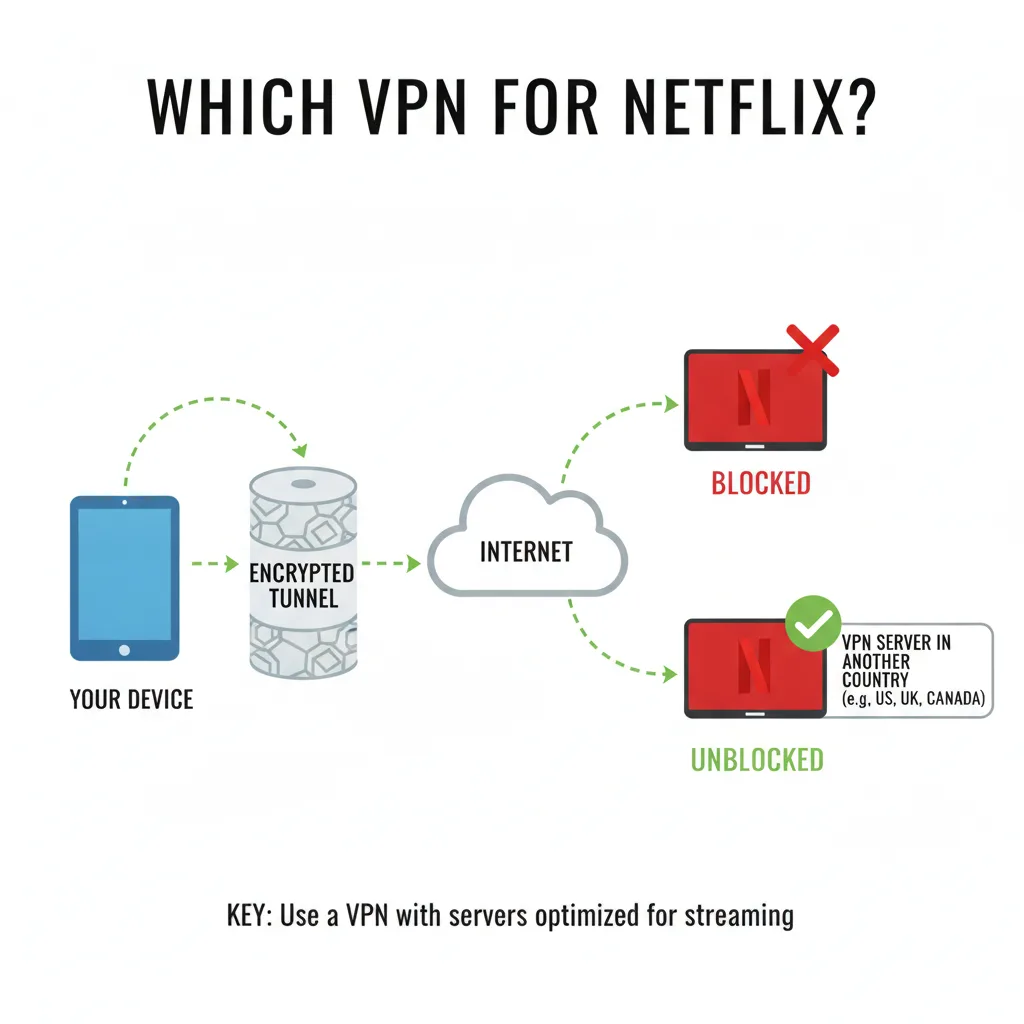
The right VPN for Netflix depends on several factors: consistent bypassing of Netflix's detection systems, fast streaming speeds, server locations that match the libraries you want, and reliable apps across your devices. This guide walks you through the selection criteria, highlights top VPN options for Netflix in 2026, and shows you how to set up and troubleshoot your connection.
Try Fubble VPN for fast, reliable Netflix streaming with WireGuard-powered connections and multi-device support.
Key Takeaways
- Netflix actively blocks many VPNs—choose providers with dedicated streaming servers and frequent IP address updates to avoid detection.
- Speed matters for streaming quality—VPNs using WireGuard or IKEv2 protocols minimize buffering and support 4K streaming when your base connection allows.
- Server locations determine accessible libraries—US, UK, and Japan offer the most popular exclusive content; your VPN's server network dictates which regions you can access.
- Budget range varies widely—expect $3–12/month for reliable paid VPNs; free VPNs are frequently blocked by Netflix and impose data caps.
- Using a VPN for Netflix violates their Terms of Service but is not illegal in most countries; account suspension is rare but possible.
Why Netflix Blocks VPNs (and What That Means for You)
Netflix invests heavily in detecting VPN traffic because licensing agreements restrict content availability by region. Understanding why and how Netflix blocks VPNs helps you choose a provider that stays ahead of detection.
Netflix's Detection Methods
Netflix identifies VPN users primarily through IP address blacklisting. When multiple accounts connect from the same IP address—common with VPN servers hosting hundreds of simultaneous users—Netflix flags that IP as belonging to a VPN or proxy. Once blacklisted, anyone connecting through that server sees the infamous error: "You seem to be using an unblocker or proxy."
Additional detection methods include DNS leak analysis (checking if your DNS requests match your apparent location) and port/protocol fingerprinting (identifying VPN-specific traffic patterns). Quality VPNs counter these with dedicated streaming IPs, automatic server rotation, and leak protection. Test for leaks using our diagnostic tools.
Licensing Agreements and Regional Content
Content owners sell streaming rights on a per-country basis. A movie studio might license a film to Netflix US but sell UK rights to a different service. Netflix must honor these geographic restrictions or face legal consequences and damaged studio relationships. This is why *The Office* might be available in the US but not France, or why anime libraries differ between Japan and other regions.
When you use a VPN to access another country's library, you're circumventing these licensing boundaries—which Netflix contractually must prevent, even though the practice benefits users seeking legitimately paid content.
Is Using a VPN for Netflix Legal?
This is not legal advice. In most countries, using a VPN to watch Netflix is not illegal—you're not pirating content; you're accessing content you've paid for through a subscription. However, it does violate Netflix's Terms of Service. The practical risk is low: Netflix might block your VPN connection or, in rare cases, display a warning, but account bans are extremely uncommon.
For detailed legal considerations, see our guide on is using a VPN legal.
Key Features to Look for in a Netflix VPN
Not all VPNs succeed with Netflix. Focus on these critical capabilities when evaluating options.
Streaming-Optimized Servers
The best VPNs maintain dedicated streaming servers with frequently rotated IP addresses. These servers are specifically configured to bypass Netflix's detection systems and handle high-bandwidth video traffic. Look for providers that explicitly advertise Netflix compatibility and update their server infrastructure regularly.
Fast Connection Speeds (WireGuard, IKEv2)
Streaming 4K Netflix requires sustained speeds of 25+ Mbps. VPN protocols significantly impact performance:
- WireGuard: Modern, lightweight protocol delivering near-native speeds with minimal overhead—ideal for streaming.
- IKEv2: Fast and stable, especially on mobile devices.
- OpenVPN: Reliable but slower; acceptable for HD but may struggle with 4K.
Fubble VPN uses WireGuard to deliver fast, consistent speeds suitable for high-quality streaming. Learn more about VPN protocols and their impact on performance.
Multi-Device Support
Your household likely streams Netflix on smart TVs, laptops, tablets, and phones simultaneously. Check how many concurrent connections each VPN allows (typically 5–10 devices). Also verify native apps for your platforms: iOS, Android, Windows, macOS, and ideally router or smart TV support.
Server Network and Netflix Library Access
The breadth of a VPN's server network determines which Netflix libraries you can access. A VPN with servers in 30+ countries gives you more content options than one covering only 10 regions. Prioritize providers with multiple servers in high-demand locations like the US, UK, Japan, Canada, and major European countries.
Reliable Customer Support
When Netflix detection strikes, you need responsive help. Look for VPNs offering 24/7 live chat or comprehensive support documentation that includes troubleshooting guides for streaming issues. Email-only support with multi-day response times creates frustrating downtime.
Top VPNs That Work with Netflix in 2026
These providers have proven track records of reliably bypassing Netflix restrictions while maintaining strong speeds and user-friendly apps. We've positioned them by their primary strengths to help match your priorities.
Best Overall: NordVPN / ExpressVPN
NordVPN and ExpressVPN dominate the premium tier with extensive server networks (5,500+ and 3,000+ servers respectively), consistent Netflix access across multiple regions, and excellent speeds. Both offer dedicated streaming servers, robust apps for all major platforms, and 24/7 support. Expect to pay $10–13/month for monthly plans, with significant discounts on annual commitments.
Strengths: Maximum reliability, widest regional coverage, premium support. Trade-off: Higher price point than budget alternatives.
Best Budget Pick: Surfshark / Fubble VPN
Surfshark delivers Netflix compatibility at $3–4/month on multi-year plans with unlimited simultaneous connections—ideal for families or power users with many devices. Fubble VPN offers similarly affordable pricing with WireGuard-based speed advantages and multi-platform support, making it an excellent choice for budget-conscious streamers who don't want to sacrifice performance.
Strengths: Affordable pricing, unlimited devices (Surfshark), fast WireGuard connections (Fubble VPN). Trade-off: Smaller server networks than premium competitors; occasional detection requires server switching.
Check out our detailed comparison of free vs paid VPN options to understand value differences.
Best for Privacy: ProtonVPN
ProtonVPN attracts privacy-focused users with its Swiss jurisdiction, open-source apps, and strict no-logs policy audited by third parties. While slightly slower than WireGuard-first competitors, it maintains reliable Netflix access on US and UK servers. Pricing starts around $5/month on longer plans.
Strengths: Transparent privacy practices, GDPR-compliant, secure core architecture. Trade-off: Fewer streaming-optimized servers than mainstream competitors.
Best for Multiple Regions: Windscribe
Windscribe offers an unusually broad server network (60+ countries) with strong Netflix compatibility, making it excellent for users who want access to less common libraries like South Korea, India, or specific European countries. Their unique "build a plan" pricing lets you pay for only the locations you need.
Strengths: Extensive regional coverage, flexible pricing. Trade-off: Inconsistent speeds across all servers; some locations work better than others.
Comparison Table:
| VPN | Price (monthly) | Devices | Netflix Regions | Speed Rating |
|---|---|---|---|---|
| NordVPN | ~$12 | 6 | 15+ | Excellent |
| ExpressVPN | ~$13 | 5 | 20+ | Excellent |
| Surfshark | ~$4 (annual) | Unlimited | 10+ | Very Good |
| Fubble VPN | ~$5 | 10 | 8+ | Excellent |
| ProtonVPN | ~$5 (annual) | 10 | 8 | Good |
| Windscribe | ~$9 | Unlimited | 15+ | Good |
For broader streaming needs beyond Netflix, explore our guide on the best VPN for streaming.
How to Set Up a VPN for Netflix (Step-by-Step)
Getting your VPN working with Netflix takes just a few minutes. Follow these platform-agnostic steps, then troubleshoot if needed.
Step 1: Choose and Subscribe to a VPN
Select a provider from the options above based on your budget and regional needs. Most VPNs offer 30-day money-back guarantees, letting you test Netflix compatibility risk-free. Create an account and note your login credentials.
Step 2: Install the VPN App
Download the native app for your device:
- Desktop: Visit your VPN's website and download the installer for Windows or macOS. Install and log in.
- Mobile: Find the official app in the iOS App Store or Google Play Store.
- Smart TV/Streaming Device: Some VPNs offer apps for Fire TV, Android TV, or Apple TV. Otherwise, configure the VPN on your router to cover all devices.
For detailed platform guides, see our articles on device-specific setup.
Step 3: Connect to the Right Server
Open your VPN app and select a server in the country whose Netflix library you want to access:
- US Netflix: Connect to a US server (typically New York, Los Angeles, or Chicago).
- UK Netflix: Choose a London or Manchester server.
- Japan Netflix: Select a Tokyo server.
If the VPN labels servers as "streaming optimized" or "Netflix US," use those. Wait until the connection confirms as active (usually indicated by a green icon or "Connected" status).
Step 4: Clear Netflix Cache and Log In
Netflix may cache your actual location. Before opening Netflix:
1. Clear browser cache (if using web browser) or force-stop the Netflix app (mobile/TV). 2. Restart the Netflix app or open it in a fresh browser window. 3. Log in and browse the library—you should now see content from your VPN server's region.
Verify your connection by visiting our IP check tool to confirm your displayed location matches your VPN server.
Troubleshooting Common Issues
"You seem to be using an unblocker or proxy" error:
- Switch to a different server in the same country (VPN IP might be blacklisted).
- Contact your VPN's support to ask which servers currently work with Netflix.
- Clear Netflix cookies and cache again.
Slow buffering or low quality:
- Connect to a server geographically closer to you for faster speeds.
- Switch to a less congested server (many VPN apps show server load).
- Ensure no other devices are consuming bandwidth on your network.
Netflix loads but shows wrong library:
- Check your device's location services and disable them (mobile/TV).
- Verify your DNS isn't leaking by testing at our tools page.
- Restart your device to fully clear old location data.
For more streaming troubleshooting, read our comprehensive VPN and streaming guide.
Netflix VPN Performance: What to Expect
VPNs inherently add a routing layer that can impact streaming performance. Here's what realistic expectations look like.
Streaming Quality and Buffering
A quality VPN on a WireGuard or IKEv2 protocol typically adds 5–15% latency and may reduce speeds by 10–20% compared to your unprotected connection. If your base internet speed is 100 Mbps, expect 80–90 Mbps through the VPN—more than enough for 4K streaming (which requires 25 Mbps).
Lower-tier protocols like older OpenVPN configurations can cut speeds by 30–50%, making 4K difficult on slower base connections. This is why choosing a modern protocol matters—Fubble VPN's WireGuard implementation minimizes this performance penalty.
Server Load and Peak Times
VPN servers experience variable load. During peak streaming hours (evenings in the server's timezone), popular servers may slow down as hundreds of users stream simultaneously. If you experience buffering:
- Try connecting to a different city in the same country.
- Use servers in regions with opposite timezones (e.g., connect to a US East Coast server from Europe during US off-peak hours).
- Check your VPN app's server load indicators if available.
Mobile vs Desktop Experience
Desktop browsers and apps generally provide the smoothest Netflix experience through VPNs, as they handle protocols more efficiently and offer better diagnostic tools. Mobile devices work well with modern VPN apps but may occasionally struggle with split tunneling or background connection drops.
Smart TVs and streaming sticks present the biggest challenge—many don't support VPN apps natively, requiring router-level configuration. Alternatively, connect your laptop to the TV via HDMI while running the VPN on the laptop.
Free VPNs vs Paid VPNs for Netflix
Free VPNs sound appealing but rarely work with Netflix. Understanding the limitations helps you make an informed choice.
Why Most Free VPNs Don't Work with Netflix
Free VPN providers face two insurmountable obstacles:
1. IP blacklisting: With limited budgets, free VPNs can't afford to constantly rotate IP addresses. Netflix quickly identifies and blocks their small IP pools. 2. Server infrastructure: Free services crowd thousands of users onto a handful of servers, making detection trivial and speeds unusable for streaming.
Most free VPNs also impose data caps (500MB–10GB/month)—barely enough for a single Netflix movie. For a detailed look at free VPN risks, read is a free VPN safe?
When a Free VPN Might Be Enough
The only scenario where free VPNs work for Netflix is with premium providers offering limited free tiers, such as:
- ProtonVPN Free: No data cap but only 3 countries (US included) and slower speeds. Netflix access is inconsistent but occasionally works.
- Windscribe Free: 10GB/month might cover light streaming, though Netflix compatibility varies.
Even these free tiers don't guarantee Netflix access. For occasional use, they're worth trying, but serious streaming requires a paid plan.
Cost Comparison and Value
Paid VPNs for Netflix range from $3–13/month depending on commitment length:
- Budget tier ($3–5/month): Surfshark, Fubble VPN on annual plans—excellent value for reliable Netflix access.
- Mid-tier ($5–8/month): ProtonVPN, Windscribe—good balance of price and features.
- Premium tier ($10–13/month): NordVPN, ExpressVPN—maximum reliability and support.
Compared to the cost of multiple regional streaming subscriptions, a $4–5/month VPN that unlocks global libraries is cost-effective. Explore our article on VPN cost per month for detailed pricing breakdowns.
Also consider our guide to the best free VPN for Netflix if you're exploring no-cost options.
Regional Netflix Libraries: Which Countries to Target
Different Netflix regions offer distinct content libraries. Here are the most popular targets and what makes them worth accessing.
| Region | Library Size | Notable Exclusives | Best For |
|---|---|---|---|
| United States | ~5,500 titles | Largest overall catalog, most US network shows, extensive movie selection | General variety, new releases |
| United Kingdom | ~5,000 titles | British TV (Doctor Who, Peaky Blinders), different movie selections | UK series, BBC productions |
| Japan | ~5,400 titles | Extensive anime catalog, Japanese films, Studio Ghibli | Anime fans, Japanese cinema |
| Canada | ~4,900 titles | Mix of US and UK content, unique Canadian shows | Alternative to US library |
| Germany | ~4,300 titles | European films, different licensing than UK | European cinema, German content |
Strategy tip: Users often maintain access to 2–3 libraries—typically US for variety, plus Japan for anime or UK for British television. Your VPN's server network should cover your priority regions.
The VPN server location you connect to determines which library you see—connecting to a Tokyo server shows you Japan's Netflix, regardless of where you physically are. This makes regional access simple once your VPN is configured.
Legal and Ethical Considerations
Understanding the legal landscape and Netflix's policies helps you make informed decisions about VPN use for streaming.
Netflix Terms of Service
Netflix's Terms of Service state: "You may view Netflix content primarily within the country in which you have established your account and only in geographic locations where we offer our service and have licensed such content." Using a VPN to access other regions' content technically violates this agreement.
Practical enforcement: Netflix's primary response to VPN use is technical blocking, not account action. They invest in detection systems but rarely suspend accounts solely for VPN usage. The company faces pressure from content licensors to prevent regional circumvention but also recognizes that many VPN users are paying subscribers.
Is It Illegal to Use a VPN for Netflix?
This is not legal advice—consult a legal professional for specific guidance. In most countries, using a VPN to access Netflix is not illegal. You're not pirating content; you're accessing content through a paid subscription using privacy tools. There are no known cases of criminal prosecution for using a VPN with Netflix.
However, in countries with VPN restrictions (China, Russia, UAE), using any VPN may face legal complications unrelated to streaming. For country-specific VPN legality, see our guide on VPN for China and the broader is using a VPN legal article.
Copyright and Fair Use
You're not infringing copyright by watching licensed content you've paid to access, even if you're technically circumventing geographic restrictions. The content is legally on Netflix's platform—you're simply changing your apparent viewing location. This differs fundamentally from piracy, which involves accessing unlicensed or stolen content.
The ethical consideration is whether circumventing licensing boundaries harms content creators. Licensing models are complex, but since you're paying for Netflix, creators receive compensation through Netflix's payment agreements with rights holders.
Frequently Asked Questions
Can Netflix ban me for using a VPN?
Netflix can technically suspend accounts for violating Terms of Service, but this is extremely rare in practice. The company focuses on blocking VPN connections rather than penalizing users. If Netflix detects a VPN, you'll see a proxy error and won't be able to stream until you disconnect the VPN or switch servers—but account bans are virtually unheard of for VPN use alone.
Which VPN has the most Netflix regions?
ExpressVPN and NordVPN lead with reliable access to 15–20+ Netflix regions, including all major libraries and many smaller markets. Windscribe offers the broadest server coverage (60+ countries) but not all servers work consistently with Netflix. For most users, reliable access to US, UK, Japan, and a few European countries covers 90% of desirable content.
Why does my VPN work for other sites but not Netflix?
Netflix employs sophisticated VPN detection specifically targeting streaming traffic. A VPN that successfully masks your location for general browsing may fail with Netflix because Netflix maintains extensive IP blacklists of known VPN servers, analyzes traffic patterns and connection metadata that reveal VPN use, and your VPN may not have dedicated streaming servers designed to bypass Netflix's systems. Switch to a VPN with proven Netflix compatibility and streaming-optimized servers.
Do smart TVs support VPNs for Netflix?
Some smart TV operating systems (Android TV, Fire TV) support native VPN apps, making setup straightforward. Most other smart TVs (Samsung, LG) don't support VPN apps directly—you'll need to either configure the VPN on your router to cover all devices on your network, connect a laptop running the VPN to your TV via HDMI, or use a streaming stick (Fire TV Stick, Chromecast) that supports VPN apps.
Can I use the same VPN for Netflix and other streaming services?
Yes—VPNs that work well with Netflix typically also succeed with other streaming platforms like Hulu, Disney+, Amazon Prime Video, and BBC iPlayer. However, each service has its own detection systems, so occasional server switching may be necessary. Check our comprehensive guide on VPN for streaming for multi-platform optimization tips.
Conclusion
Choosing which VPN to use for Netflix in 2026 comes down to balancing reliability, speed, server coverage, and budget. Premium options like NordVPN and ExpressVPN offer maximum compatibility and support but at higher prices. Budget-friendly alternatives like Surfshark and Fubble VPN deliver excellent value with WireGuard-powered speeds and consistent Netflix access for users who don't need premium features.
Focus on VPNs with dedicated streaming servers, modern protocols (WireGuard or IKEv2), and robust server networks covering your priority regions. Remember that Netflix's detection systems evolve constantly—no VPN guarantees permanent, 100% access, but quality providers adapt quickly to maintain reliability.
Start streaming global Netflix content with Fubble VPN today with fast WireGuard connections, multi-device support, and transparent performance. Whether you're traveling abroad, seeking exclusive international content, or simply want access to the full Netflix catalog you're paying for, the right VPN makes streaming seamless and frustration-free.