¿Es legal usar una VPN? Para la mayoría de los usuarios de Internet en todo el mundo, la respuesta es sí: las VPN son herramientas de seguridad y privacidad completamente legales. Las redes privadas virtuales son legales en los Estados Unidos, Canadá, el Reino Unido, la Unión Europea, Australia y la gran mayoría de países del mundo.
¿Es legal usar una VPN? Para la mayoría de los usuarios de Internet en todo el mundo, la respuesta es sí: las VPN son herramientas de privacidad y seguridad completamente legales. Las redes privadas virtuales son legales en los Estados Unidos, Canadá, el Reino Unido, la Unión Europea, Australia y la gran mayoría de los países del mundo.
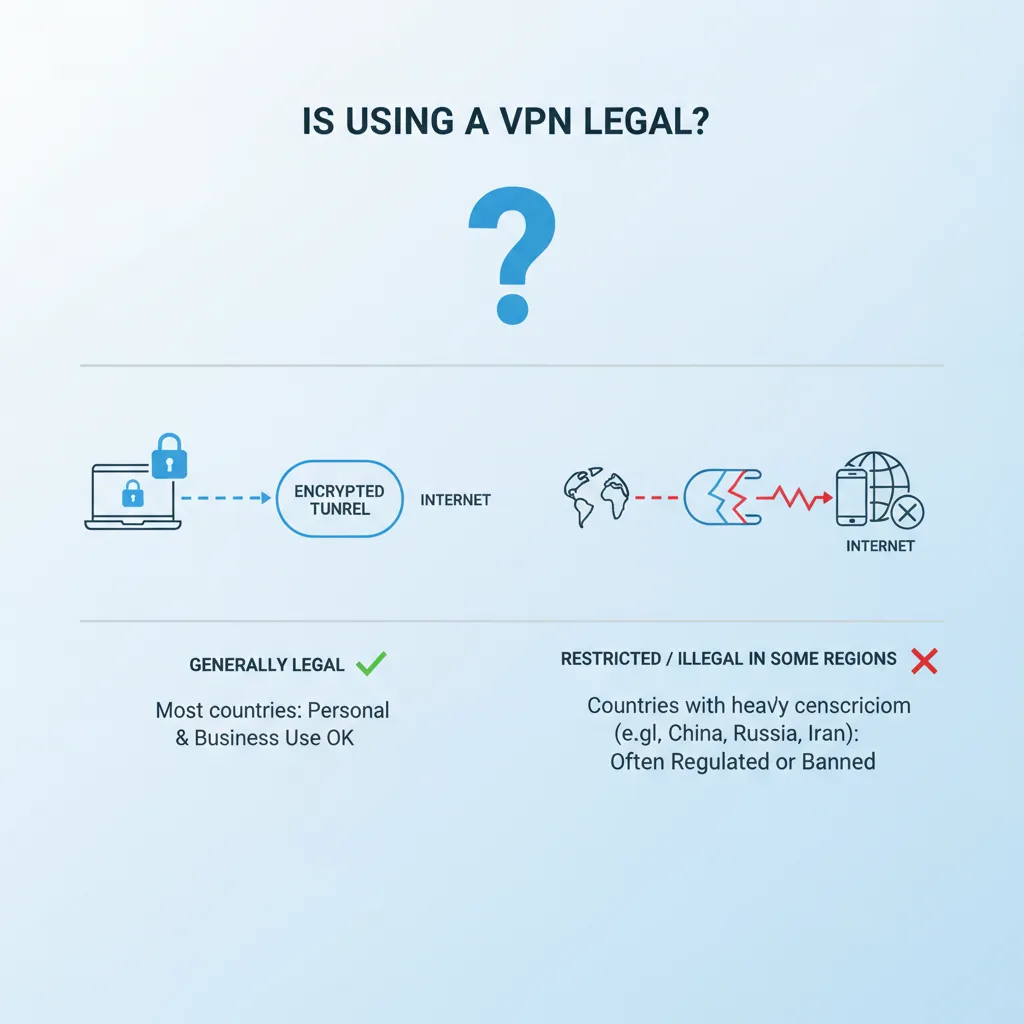
Sin embargo, la legalidad de las VPN no es del todo sencilla. Aproximadamente 10 países restringen o prohíben el uso de VPN, normalmente regímenes autoritarios con una estricta censura en Internet. Más importante aún, usar una VPN no te da permiso para infringir las leyes: es una herramienta de privacidad, no inmunidad legal.
Esta guía explica la legalidad de VPN en más de 100 países, aclara cuándo el uso de VPN cruza los límites legales y le muestra cómo usar Fubble VPN de manera responsable dondequiera que viaje o viva.
Resumen rápido:
- Las VPN son legales en EE. UU., Reino Unido, Canadá, UE, Australia, Japón y la mayoría de las democracias
- China, Rusia, Irán, Emiratos Árabes Unidos, Corea del Norte y algunos otros países restringen el uso de VPN
- Las actividades ilegales siguen siendo ilegales incluso cuando se utiliza una VPN
- La transmisión por secuencias con VPN puede violar los términos del servicio, pero no es un delito
- El uso de VPN empresarial es legal prácticamente en todas partes
¿Es legal usar una VPN? La respuesta rápida
Sí, el uso de una VPN es legal en la mayoría de los países. Las VPN son herramientas legítimas utilizadas diariamente por millones de personas, empresas, gobiernos y profesionales de la seguridad para proteger la privacidad y las comunicaciones seguras.
Dónde las VPN son totalmente legales:
- Estados Unidos, Canadá, México
- Reino Unido y los 27 países de la Unión Europea
- Australia, Nueva Zelanda, Japón, Corea del Sur, Singapur
- India (con requisitos de retención de datos del proveedor)
- Brasil, Argentina, Chile y la mayoría de los países latinoamericanos
- Sudáfrica y la mayoría de los países africanos
Dónde enfrentan restricciones las VPN: Aproximadamente 10 países prohíben o restringen en gran medida el uso de VPN:
- Prohibiciones completas: Corea del Norte, Turkmenistán
- Fuertes restricciones: China, Rusia, Irán, Emiratos Árabes Unidos, Bielorrusia, Turquía, Irak, Omán
La distinción fundamental es lo que se hace con una VPN. La tecnología en sí es legal en la mayoría de los lugares, pero usarla para cometer delitos no lo protege de ser procesado. Piense en ello como en un automóvil: conducir es legal, pero no puede usarlo para infringir las leyes.
La legalidad de la VPN depende de dos factores: 1. Su ubicación: ¿Está permitida la herramienta VPN? 2. Tu actividad: ¿la estás utilizando con fines legales?
Exploremos ambas dimensiones en detalle.
Por qué las VPN son legales en la mayoría de los países
Mucha gente se pregunta: si las VPN cifran el tráfico de Internet y ocultan la actividad en línea, ¿por qué los gobiernos las permiten? La respuesta está en comprender los propósitos legítimos y esenciales de la tecnología VPN.
Herramientas empresariales y de seguridad esenciales
Las organizaciones de todo el mundo dependen de las VPN para sus operaciones diarias:
Acceso remoto a redes corporativas: los empleados se conectan de forma segura a los recursos de la empresa desde oficinas en casa, cafeterías o mientras viajan. El trabajo remoto sería casi imposible sin la tecnología VPN.
Protección de datos confidenciales: los bancos, los proveedores de atención médica, las firmas legales y las agencias gubernamentales utilizan VPN para cifrar las comunicaciones confidenciales y cumplir con los requisitos normativos.
Conectar sucursales: las corporaciones multinacionales conectan oficinas en todos los países a través de túneles VPN seguros, creando redes privadas a través de una infraestructura pública de Internet.
Cumplimiento de la industria: HIPAA (atención médica), GDPR (protección de datos de la UE), PCI-DSS (procesamiento de pagos) y otras regulaciones a menudo requieren conexiones cifradas que proporcionan las VPN.
Prohibir las VPN paralizaría las operaciones comerciales modernas, el comercio internacional y la economía global del trabajo remoto.
El cifrado es una seguridad fundamental
El cifrado VPN tiene el mismo propósito legítimo que HTTPS en sitios web, aplicaciones de mensajería cifradas como Signal o documentos protegidos con contraseña. Los gobiernos reconocen que la tecnología de cifrado no es intrínsecamente criminal: es esencial para:
- Seguridad de las transacciones bancarias y financieras en línea
- Proteger las comunicaciones personales contra la interceptación
- Prevención del robo de identidad en redes WiFi públicas
- Defensa contra cibercriminales y actores maliciosos
- Protección de la propiedad intelectual y los secretos comerciales
Incluso las agencias gubernamentales, las organizaciones militares y las fuerzas del orden utilizan la tecnología VPN para proteger las comunicaciones clasificadas. La herramienta en sí es neutral.
La privacidad como derecho reconocido
En democracias con fuertes protecciones de la privacidad, el derecho a la comunicación privada es fundamental. El RGPD de la Unión Europea reconoce explícitamente la privacidad como un derecho humano. Las VPN ayudan a las personas a ejercer sus derechos de privacidad al:
- Prevenir el seguimiento invasivo y la recopilación de datos por parte de los anunciantes
- Limitar la vigilancia masiva y la recopilación masiva de datos
- Proteger a periodistas, activistas y denunciantes
- Impedir que los ISP supervisen y vendan datos de navegación
- Permitir la expresión anónima y las comunicaciones protegidas
Los tribunales de los países democráticos defienden sistemáticamente el derecho a utilizar herramientas de cifrado y privacidad para fines legales.
Abordar la pregunta "Si las VPN ocultan delitos, ¿por qué son legales?" Pregunta
Esta pregunta común, popular en Reddit y foros, revela un malentendido fundamental. Las VPN no brindan inmunidad frente a las autoridades.
Qué hacen realmente las VPN:
- Cifre su tráfico para que su ISP no pueda ver qué sitios web visita
- Ocultar su dirección IP real de sitios web y servicios en línea
- Protege tus datos en redes WiFi públicas no seguras
- Evitar el seguimiento y la vigilancia ocasionales
Lo que no hacen las VPN:
- Hacerte completamente anónimo o imposible de rastrear
- Borrar toda evidencia de actividad en línea
- Evitar que las fuerzas del orden investiguen delitos
- Darle permiso legal para infringir las leyes
Los organismos encargados de hacer cumplir la ley aún pueden investigar delitos a través de VPN obteniendo órdenes judiciales para obtener información de la cuenta, rastreando los métodos de pago, monitoreando la actividad fuera de la conexión VPN y utilizando el trabajo de detective tradicional. Una VPN proporciona privacidad frente a su ISP y observadores casuales, no invisibilidad ante una investigación determinada.
Dónde están prohibidas o restringidas las VPN
Si bien las VPN gozan de estatus legal en todo el mundo, un pequeño número de países (principalmente regímenes autoritarios con una amplia censura en Internet) restringen o prohíben su uso.
Países con prohibiciones completas de VPN
Corea del Norte mantiene el entorno de Internet más restrictivo del mundo. Sólo una pequeña élite aprobada por el gobierno tiene acceso a Internet y está limitada a una intranet nacional llamada Kwangmyong sin conexión a Internet global. El uso de VPN está completamente prohibido, aunque esto es en gran medida irrelevante ya que, para empezar, los ciudadanos carecen de acceso a Internet.
Turkmenistán impone una prohibición casi total de las VPN como parte de su amplio aparato de censura en Internet. El gobierno mantiene un control estricto sobre todo el acceso a Internet y el uso de VPN para eludir las restricciones estatales puede resultar en sanciones severas.
Países con fuertes restricciones de VPN
Varios países no prohíben las VPN por completo, pero imponen restricciones significativas que hacen que su uso legal sea difícil o peligroso:
China opera el "Gran Cortafuegos", uno de los sistemas de vigilancia y censura de Internet más sofisticados del mundo. La legalidad de las VPN en China es compleja:
- Las VPN no son explícitamente ilegales para uso personal
- El gobierno exige que los proveedores de VPN obtengan licencias y cumplan con la censura
- Solo las VPN aprobadas por el gobierno son legales (lo que va en contra de los propósitos de privacidad)
- China bloquea activamente la mayoría de los servicios VPN internacionales a nivel de red
- Las empresas que utilizan VPN sin licencia se enfrentan a multas de hasta 2300 USD
- La aplicación de la ley de forma individual se centra en la venta de servicios VPN en lugar de en el uso personal
Millones de residentes chinos todavía acceden a VPN extranjeras mediante soluciones técnicas, pero la aplicación de estas medidas se ha intensificado desde 2017 y la confiabilidad de la conexión es deficiente.
Rusia aprobó leyes VPN restrictivas en 2017 que exigen a los proveedores de VPN:
- Conéctese a una base de datos gubernamental de sitios web bloqueados
- Bloquear el acceso al contenido de la lista negra
- Mantener registros para la inspección gubernamental
Los servicios VPN que se nieguen a cumplir están prohibidos. Las personas se enfrentan a multas (de 3.000 a 5.000 rublos o de 40 a 70 dólares estadounidenses) por acceder a contenidos prohibidos a través de VPN. La aplicación de la ley se dirige a los proveedores de VPN de manera más agresiva que a los usuarios individuales, pero el riesgo legal existe.
Irán solo permite VPN aprobadas por el gobierno y bloquea la mayoría de los servicios internacionales. El uso de VPN no autorizadas para eludir la censura (especialmente para acceder a contenido de oposición política u organizar protestas) puede resultar en prisión. Las autoridades iraníes monitorean activamente el uso de VPN durante períodos políticamente sensibles.
Emiratos Árabes Unidos técnicamente permite el uso de VPN para fines comerciales legítimos (acceso a redes corporativas, seguridad bancaria), pero criminaliza el uso de VPN para acceder a contenido que viole la ley de los EAU. Las actividades prohibidas incluyen:
- Acceder a servicios VoIP (Skype, llamadas de WhatsApp)
- Ver contenido para adultos
- Sitios web de juegos de apuestas
- Contenido crítico al gobierno
Las penas van desde multas de hasta 545.000 dólares (el máximo citado con frecuencia) hasta prisión. La aplicación de la ley varía: los turistas que utilizan VPN para correo electrónico o operaciones bancarias rara vez enfrentan consecuencias, pero acceder a contenido prohibido conlleva un riesgo real.
Turquía no prohíbe permanentemente las VPN, pero bloquea periódicamente los servicios VPN y Tor durante disturbios políticos, elecciones o protestas. El acceso se vuelve poco confiable durante períodos sensibles y el gobierno monitorea más de cerca el uso de VPN durante las medidas represivas.
Bielorrusia prohibió Tor y muchos servicios VPN en 2015, en particular apuntando a herramientas que ayudan a los ciudadanos a eludir los filtros de Internet del gobierno y acceder a fuentes de noticias independientes.
Irak, Omán y Uganda han implementado varias restricciones de VPN, a menudo durante elecciones o inestabilidad política, para controlar el flujo de información e impedir la organización de movimientos de oposición.
Realidad de aplicación frente a ley escrita
Las leyes escritas no siempre coinciden con su aplicación en el mundo real. Contexto importante:
La aplicación de la ley se dirige a los proveedores, no a los usuarios: los gobiernos suelen perseguir a las empresas de VPN que operan dentro de sus fronteras en lugar de procesar a los usuarios individuales. Es más fácil bloquear un servicio VPN que atrapar a millones de usuarios individuales.
A menudo existen excepciones en materia de turismo: los visitantes extranjeros que utilizan VPN para realizar operaciones bancarias, correo electrónico del trabajo o seguridad general rara vez enfrentan consecuencias, incluso en países restrictivos. La aplicación de la ley se centra en los usuarios nacionales que acceden a contenido político prohibido.
Aplicación inconsistente: muchos países restrictivos carecen de recursos para monitorear todo el uso de VPN. Se centran en casos de alto perfil (periodistas, activistas, organizadores de la oposición) en lugar de en cada turista que consulta Gmail.
Sin embargo, esta realidad práctica no hace que el uso de VPN sea seguro o legal en estas jurisdicciones. El riesgo persiste, especialmente si accedes a contenido políticamente sensible o si tu uso de VPN llega a conocimiento de las autoridades por otros motivos.
Países donde las VPN son totalmente legales
La inmensa mayoría de los países no imponen restricciones sobre el uso de VPN. Aquí es donde puedes usar Fubble VPN sin ningún problema legal:
América del Norte
Estados Unidos: las VPN son completamente legales y sin restricciones. Decenas de millones de estadounidenses utilizan VPN por razones de privacidad, streaming, trabajo remoto y seguridad. Ninguna ley federal o estatal prohíbe o restringe el uso de VPN. Estados Unidos cuenta con fuertes protecciones de la libertad de expresión que se extienden a las herramientas de privacidad.
Canadá: Totalmente legal con sólidas protecciones de privacidad. Las leyes de privacidad canadienses y una sólida cultura de derechos digitales hacen que las VPN sean populares para proteger contra el seguimiento y la recopilación de datos de los ISP.
México: no hay restricciones en el uso de VPN. Legal para todos los efectos.
Europa
Los 27 estados miembros de la Unión Europea permiten el uso de VPN sin restricciones, incluyendo:
- Reino Unido (después del Brexit, las VPN siguen siendo totalmente legales)
- Alemania, Francia, Italia, España, Países Bajos
- Bélgica, Suecia, Dinamarca, Finlandia, Noruega
- Polonia, República Checa, Austria, Portugal, Grecia
- Irlanda, Rumanía, Bulgaria y todos los demás países de la UE
El Reglamento General de Protección de Datos (GDPR) de la UE consagra la privacidad como un derecho fundamental y fomenta activamente las tecnologías de protección de la privacidad como las VPN. Los tribunales europeos han confirmado repetidamente el derecho a utilizar herramientas de cifrado.
Suiza (fuera de la UE): totalmente legal; Las sólidas leyes de privacidad y la cultura del secreto bancario de Suiza lo convierten en un lugar popular para las empresas de VPN.
Noruega e Islandia (fuera de la UE): completamente legal con sólidas protecciones de privacidad.
Asia-Pacífico
Japón: las VPN son completamente legales y sin restricciones. Popular entre usuarios y empresas preocupados por la privacidad.
Corea del Sur: Totalmente legal. No hay restricciones en el uso de VPN para ningún propósito.
Australia: legal y cada vez más popular. Las leyes de retención de datos obligatorias de Australia (que exigen que los ISP almacenen metadatos durante dos años) en realidad han impulsado la adopción de VPN entre los defensores de la privacidad.
Nueva Zelanda: Totalmente legal y sin restricciones.
Singapur: las VPN son legales, aunque Singapur mantiene algunas restricciones de contenido de Internet. Se permite el uso de una VPN; acceder a contenido prohibido específico puede no serlo.
Taiwán: completamente legal con sólidas protecciones de derechos digitales.
India: legal para los usuarios. Sin embargo, India implementó una directiva de 2022 que exige que los proveedores de VPN recopilen y almacenen datos de los usuarios (nombres, direcciones IP, patrones de uso) durante cinco años y los proporcionen al gobierno cuando los solicite. Varios proveedores de VPN centrados en la privacidad se retiraron de la India en lugar de cumplir. Los usuarios aún pueden usar legalmente servicios VPN basados en otros lugares.
Tailandia, Filipinas, Vietnam, Indonesia: las VPN son legales en estos países, aunque cada uno mantiene distintos niveles de censura del contenido de Internet. La herramienta VPN en sí está permitida.
América Latina
Las VPN son legales en toda Centro y Sudamérica sin restricciones:
- Brasil: Totalmente legal; popular para streaming y privacidad
- Argentina, Chile, Uruguay: sin restricciones
- Colombia, Perú, Ecuador, Bolivia — Legal
- México, Costa Rica, Panamá: totalmente permitido
- Venezuela: Técnicamente legal, aunque la infraestructura de Internet es deficiente y la vigilancia gubernamental es extensa
Medio Oriente (estado mixto)
Israel: Totalmente legal y sin restricciones.
Jordania: legal para la mayoría de los fines.
Líbano: generalmente legal.
Turquía, Emiratos Árabes Unidos, Irán, Irak, Omán: consulta la sección de restricciones más arriba.
África
La mayoría de los países africanos permiten el uso de VPN sin restricciones:
- Sudáfrica: totalmente legal; popular por su privacidad y streaming
- Kenia, Nigeria, Ghana: legal sin restricciones
- Egipto: técnicamente legal, aunque el gobierno bloquea periódicamente los servicios VPN durante los disturbios políticos
- Marruecos, Argelia y Túnez: generalmente permitido
La legalidad de las VPN en África a menudo se correlaciona con los niveles generales de libertad en Internet y la estabilidad gubernamental.
¿Qué hace que el uso de VPN sea ilegal?
Comprender la legalidad de las VPN requiere distinguir entre la herramienta en sí y cómo la usas. Incluso en países donde las VPN son completamente legales, ciertas actividades siguen estando prohibidas y son procesables.
Las actividades ilegales siguen siendo ilegales a través de una VPN
El uso de una VPN no crea inmunidad legal ni una "excepción penal". Estas actividades siguen siendo ilegales en todas partes, VPN o no:
Infracción de derechos de autor y piratería: descargar películas, música, programas de televisión o software protegidos por derechos de autor sin autorización viola las leyes de propiedad intelectual en prácticamente todos los países. Una VPN puede ocultar su actividad a su ISP y a las agencias encargadas de hacer cumplir los derechos de autor, pero no hace que la actividad sea legal. Si te descubren, te enfrentarás a las mismas sanciones que si no hubieras utilizado una VPN.
Fraude y delitos financieros: el fraude con tarjetas de crédito, el robo de identidad, el fraude electrónico, el lavado de dinero, la evasión fiscal y otros delitos financieros siguen siendo delitos procesables independientemente del uso de VPN. Las fuerzas del orden pueden rastrear transacciones financieras, métodos de pago y seguir rastros de dinero incluso cuando las VPN ocultan la actividad en Internet.
Hacking y acceso no autorizado a computadoras: irrumpir en sistemas informáticos, robar datos, distribuir malware, ataques DDoS y otros delitos informáticos son ilegales en todas partes. Las VPN no impiden la investigación forense digital ni ocultan toda la evidencia técnica.
Acceso y distribución de contenido ilegal: acceder o distribuir material de explotación infantil, contenido terrorista u otro material ilegal sigue siendo una actividad delictiva. Los organismos encargados de hacer cumplir la ley en todo el mundo dan prioridad a estas investigaciones y pueden evitar las medidas de privacidad de VPN mediante órdenes judiciales y cooperación internacional.
Acoso, acecho y amenazas: utilizar una VPN para ocultar su identidad mientras amenaza, acosa o acecha a otros en línea sigue siendo un delito procesable. Las víctimas pueden denunciar a las autoridades, quienes pueden obtener órdenes judiciales para los registros del proveedor de VPN (cuando existan) o rastrearlo a través de otras pruebas digitales.
Tráfico de drogas y comercio ilegal: la compra o venta de drogas ilegales, armas u otro contrabando a través de transacciones ocultas mediante VPN sigue siendo una actividad delictiva sujeta a procesamiento.
El patrón es claro: una VPN es una herramienta de privacidad, no una tarjeta para salir libre de la cárcel. Proporciona privacidad frente a su ISP, seguimiento de sitios web y vigilancia informal, no inmunidad frente a las autoridades que investigan delitos reales.
Evitar la censura en países restringidos
En los países que prohíben o restringen las VPN, el acto ilegal específico suele ser:
Acceder a contenido bloqueado por el gobierno: usar una VPN para visitar sitios web incluidos en la lista negra de su gobierno (sitios de noticias, redes sociales, contenido de oposición política, material religioso).
Evadir el Gran Cortafuegos o sistemas similares: en China, eludir la infraestructura de censura estatal es el principal delito relacionado con la VPN, no el uso de la VPN en sí.
Acceder a redes sociales extranjeras: en países que bloquean Facebook, Twitter, YouTube o Instagram, el uso de VPN para acceder a estas plataformas viola la ley local.
Organizar la oposición política: el uso de VPN para coordinar protestas, compartir materiales de la oposición o comunicarse con medios extranjeros genera la aplicación de medidas más estrictas en los países autoritarios.
La distinción clave: en países restrictivos, a qué acceso a través de la VPN determina el riesgo legal, no solo el hecho de que esté usando una. Un viajero de negocios que utiliza una VPN para consultar el correo electrónico del trabajo corre un riesgo mínimo. Un periodista que utiliza una VPN para compartir pruebas de corrupción gubernamental se enfrenta a un grave peligro.
Infracciones de los términos de servicio frente a infracciones legales
Esta distinción confunde a muchos usuarios, por lo que vale la pena aclarar: violar los términos de servicio de una empresa no es lo mismo que infringir la ley.
Ejemplo de servicios de streaming:
- Netflix, Hulu, Disney+, HBO Max, Amazon Prime y BBC iPlayer prohíben el uso de VPN en sus términos de servicio
- El uso de una VPN para acceder a contenido restringido geográficamente viola estos términos contractuales
- Esta es una disputa contractual, no un acto criminal en países donde las VPN son legales
- Las consecuencias incluyen suspensión de cuenta, cancelación o bloqueo de servicio
- No enfrentará arresto, multas ni procesamiento, solo la pérdida de acceso al servicio
Infracciones de la política corporativa:
- Su empleador puede prohibir el uso de VPN personal en dispositivos de la empresa
- La violación de esta política es una cuestión laboral, no una cuestión legal
- Las consecuencias incluyen advertencias, despido o medidas disciplinarias
- Esto no es un delito penal a menos que también esté cometiendo delitos informáticos (acceso no autorizado, robo de datos)
Infracciones de los términos del sitio web:
- Algunos sitios web prohíben el acceso VPN en sus términos
- Pueden bloquear tu acceso o prohibir tu cuenta
- Esto no es ilegal: están haciendo cumplir sus términos privados
La diferencia práctica: violar las leyes puede resultar en arresto, multas o prisión. La violación de los términos de servicio resulta en la pérdida del servicio, la suspensión de la cuenta o la terminación del contrato.
Intención, contexto y uso legítimo versus ilegítimo
Los sistemas legales consideran el contexto al evaluar el uso de VPN:
Usos claramente legítimos:
- Protección de credenciales bancarias en WiFi pública
- Seguridad de las comunicaciones empresariales y el trabajo remoto
- Evitar que el ISP rastree el historial de navegación
- Acceder a los servicios de su país de origen mientras viaja al extranjero
- Protección general de la privacidad frente a anunciantes y intermediarios de datos
Usos claramente ilegítimos:
- Ocultar pruebas de delitos a las autoridades
- Cometer fraude mientras se oculta su ubicación
- Acceder a contenidos ilegales (CSAM, materiales terroristas)
- Evadir la vigilancia legal autorizada por orden judicial
Áreas grises:
- Acceder a contenido de streaming restringido geográficamente (viola los términos pero no es delictivo)
- Evitar los filtros de contenido del lugar de trabajo (infracción de la política, no ilegal)
- Acceder a noticias censuradas en tu país (depende de la jurisdicción: legal en EE. UU., ilegal en China)
El principio general: si una actividad es legal sin una VPN, es legal con una VPN. Si una actividad es ilegal sin una VPN, sigue siendo ilegal con una VPN.
Riesgos legales y sanciones por el uso de VPN
Comprender las posibles consecuencias ayuda a los viajeros y trabajadores remotos a tomar decisiones informadas sobre el uso de VPN en diferentes países.
Multas y sanciones económicas
Emiratos Árabes Unidos: la multa máxima de 545 000 dólares citada con frecuencia se aplica específicamente a la ley de los EAU por usar una VPN para cometer fraude o acceder a servicios que violan las leyes federales sobre delitos cibernéticos. En la práctica:
- Las multas reales varían según la gravedad de la infracción
- La mayoría de las sanciones se dirigen a operadores de VPN comerciales, no a usuarios individuales
- Los turistas que utilizan VPN para realizar operaciones bancarias rara vez enfrentan consecuencias
- Acceder a contenidos prohibidos (servicios VoIP, juegos de apuestas, material para adultos) conlleva multas cada vez mayores
China: las empresas que utilizan VPN sin licencia se enfrentan a multas de hasta 15.000 yuanes (aproximadamente 2.300 dólares). Los usuarios individuales rara vez enfrentan sanciones financieras; La aplicación de la ley se dirige a los proveedores de servicios VPN.
Rusia: las personas que acceden a contenido prohibido a través de VPN se enfrentan a multas administrativas de 3000 a 5000 rublos (entre 40 y 70 dólares estadounidenses). Las infracciones repetidas o el funcionamiento de una VPN comercial conllevan sanciones más severas.
Turquía, Egipto y otros: las multas varían ampliamente y rara vez se aplican a usuarios individuales. La mayoría de las sanciones se dirigen a proveedores de VPN u operadores comerciales.
Encarcelamiento y procesamiento penal
En países autoritarios, el uso de VPN combinado con el acceso a contenido prohibido u organización de actividades políticas puede resultar en prisión:
Irán: activistas, periodistas y organizadores políticos han recibido penas de prisión (a menudo de varios años) por utilizar VPN para coordinar protestas, acceder a contenidos de la oposición o comunicarse con medios extranjeros. El uso de VPN en sí no siempre es el cargo principal; normalmente se lo acusa junto con "propaganda contra el Estado" o "amenaza a la seguridad nacional".
China: las sentencias de prisión generalmente se aplican a la operación de servicios VPN sin licencia o a la venta de acceso VPN, no al uso personal ordinario. Sin embargo, el uso de VPN para acceder a material considerado una amenaza para la seguridad del Estado puede resultar en detención.
EAU: es posible el encarcelamiento por delitos relacionados con VPN (fraude, acceso a contenido ilegal), con sentencias que van de meses a años, dependiendo de la gravedad.
Corea del Norte: si bien los datos son limitados debido a la naturaleza cerrada del régimen, el acceso no autorizado a Internet de cualquier tipo (que requeriría herramientas similares a VPN) conlleva sanciones severas que incluyen prisión y posible ejecución.
El punto crítico: el encarcelamiento por uso de VPN casi siempre implica acceder a contenido políticamente sensible u organizar actividades de oposición, no simplemente usar herramientas de privacidad con fines benignos.
Bloqueo de servicios, limitación y advertencias de ISP
Más común que multas o arresto:
Bloqueo de VPN: los países detectan y bloquean activamente las direcciones IP de los servidores VPN. Cuando se identifican los servidores de los proveedores de VPN, se incluyen en la lista negra a nivel de firewall nacional. Esto hace que los servicios VPN no sean confiables o inutilizables sin una rotación constante del servidor.
Inspección profunda de paquetes (DPI): los sistemas de censura avanzados identifican patrones de tráfico VPN mediante una inspección profunda de paquetes, incluso cuando están cifrados. El Gran Cortafuegos de China utiliza DPI para detectar y bloquear conexiones VPN en tiempo real.
Limitación de la conexión: algunos ISP ralentizan las conexiones detectadas como tráfico VPN para desalentar su uso sin bloquearlas directamente.
Advertencias de ISP: en algunas jurisdicciones, los ISP envían cartas de advertencia a los usuarios cuya actividad de VPN se detecta, aunque esto es poco común y generalmente no va seguido de sanciones reales.
Cancelación de cuenta: los servicios de streaming (Netflix, Disney+, BBC iPlayer) bloquean las direcciones IP de VPN y pueden suspender cuentas detectadas repetidamente usando VPN, aunque rara vez prohíben permanentemente a los suscriptores de pago.
¿Quién es realmente procesado?
Comprender las prioridades de cumplimiento proporciona una evaluación de riesgos realista:
Prioridad de cumplimiento alta:
- Proveedores de servicios VPN que operan en países restrictivos
- Vendedores y revendedores de VPN comerciales
- Activistas políticos y organizadores de la oposición que utilizan VPN
- Periodistas que informan sobre actividades gubernamentales
- Personas que utilizan VPN para delitos graves (fraude, piratería informática)
Prioridad de aplicación baja:
- Turistas extranjeros que utilizan VPN para operaciones bancarias o correo electrónico
- Viajeros de negocios que acceden a redes corporativas
- Usuarios ocasionales que acceden a contenido de entretenimiento
- Personas que utilizan VPN únicamente para protegerse del seguimiento del ISP
La aplicación de la ley casi siempre se dirige a proveedores de VPN o a casos individuales de alto perfil. El enjuiciamiento aleatorio de usuarios comunes es poco común porque requiere muchos recursos y provoca críticas internacionales.
Legalidad de VPN para casos de uso comunes
Comprender cómo se aplica la legalidad de las VPN a escenarios cotidianos aclara los límites prácticos del uso legal de las VPN.
Transmisión de Netflix, Disney+, HBO y otros servicios
Estatus legal en la mayoría de los países: el uso de una VPN para acceder a contenido de streaming restringido geográficamente es legal desde una perspectiva de derecho penal. No enfrentará arresto, procesamiento ni multas en los Estados Unidos, el Reino Unido, Canadá, la UE, Australia ni en la mayoría de los demás países.
Infracción de los términos de servicio: Las plataformas de streaming prohíben explícitamente el uso de VPN en sus acuerdos de suscripción:
- Los términos de Netflix establecen que solo puedes acceder al contenido disponible en tu ubicación geográfica
- Disney+, HBO Max, Hulu, Amazon Prime y BBC iPlayer tienen restricciones similares
- El uso de una VPN viola estos términos contractuales
Consecuencias prácticas:
- El servicio puede detectar y bloquear direcciones IP de VPN
- Su cuenta podría recibir advertencias
- Las infracciones repetidas podrían dar lugar a la suspensión o cancelación de la cuenta
- Es probable que no recibas reembolsos por las tarifas de suscripción
- El procesamiento penal no ocurre por esto
Realidad: Millones de usuarios utilizan VPN diariamente. Los servicios centran sus recursos en bloquear direcciones IP de VPN a través de medios técnicos en lugar de perseguir a suscriptores individuales. El peor resultado realista es la pérdida de acceso al servicio.
Trabajo remoto y uso de VPN corporativa
Legal en todas partes, incluidos los países restrictivos. El uso de VPN empresarial para fines corporativos legítimos es:
Aceptado universalmente para:
- Empleados remotos que acceden a las redes y recursos de la empresa
- Protección de datos confidenciales de clientes y comunicaciones confidenciales
- Protección de la información financiera y procesamiento de pagos
- Cumplir con el cumplimiento normativo (HIPAA, GDPR, PCI-DSS, SOX)
- Conectar sucursales y habilitar equipos distribuidos
Incluso China permite el uso empresarial de VPN a través de proveedores de VPN corporativos con licencia que cumplen con los requisitos gubernamentales. La distinción es clara: se permiten VPN empresariales para comercio legítimo; Las VPN de consumo para eludir la censura enfrentan restricciones.
Sin riesgos legales al utilizar VPN proporcionadas por la empresa con fines laborales en cualquier país del mundo. Esto representa el propósito original de la tecnología VPN y permanece protegido incluso en países hostiles a los servicios VPN de consumo.
Seguridad y protección WiFi pública
Legal en todas partes y recomendado activamente por expertos en seguridad. Usar una VPN en redes públicas no seguras es:
Universalmente considerado legítimo para:
- Redes WiFi de aeropuertos (a menudo no seguras o mal protegidas)
- Internet cafetería y restaurante
- Conexiones a Internet de hoteles (objetivos frecuentes de los piratas informáticos)
- Ordenadores públicos de bibliotecas y universidades
- Redes WiFi para conferencias y eventos
Esto representa el objetivo principal de seguridad de la tecnología VPN: cifrar sus datos para evitar la interceptación por parte de actores malintencionados en redes compartidas. Los investigadores de seguridad, las agencias gubernamentales de ciberseguridad (como US-CERT) y los profesionales de TI recomiendan universalmente el uso de VPN en redes WiFi públicas.
Ningún país restringe el uso de VPN por este motivo de seguridad. Incluso en países que limitan el uso de VPN para eludir la censura, protegerse en WiFi público sigue siendo aceptable y esperado.
Redes internacionales de viajes y hoteles
Legal en la mayoría de destinos y recomendable por seguridad. Los viajeros utilizan VPN para:
Acceder a los servicios del país de origen: las aplicaciones bancarias a menudo restringen el acceso desde direcciones IP extranjeras. Las VPN te permiten parecer que estás accediendo desde tu país de origen, evitando bloqueos de seguridad.
WiFi segura en hoteles: las redes de hoteles son objetivos comunes para los piratas informáticos. El cifrado VPN protege sus datos de otros invitados o redes comprometidas.
Mantener el acceso al trabajo: los trabajadores remotos y los nómadas digitales utilizan VPN para acceder a las redes corporativas mientras están en el extranjero.
Excepciones importantes:
- Descargue previamente aplicaciones VPN antes de viajar a China, Rusia u otros países restrictivos (los sitios web VPN suelen estar bloqueados)
- Comprenda que las redes hoteleras en China bloquean con frecuencia las conexiones VPN a nivel del enrutador
- Algunos países controlan el uso de Internet en los hoteles más de cerca que las conexiones residenciales
- El uso de VPN para acceder a contenido prohibido mientras se viaja a países restrictivos conlleva los mismos riesgos que para los residentes locales
Activismo político, periodismo e investigación
Legal y protegido en las democracias; alto riesgo en países autoritarios.
En EE. UU., Reino Unido, UE, Canadá, Australia y otras democracias:
- Los periodistas utilizan VPN para proteger fuentes y comunicaciones confidenciales
- Los activistas utilizan VPN para organizar, comunicar e investigar temas delicados de forma segura
- Los investigadores utilizan VPN para acceder a información sin vigilancia
- Los denunciantes utilizan VPN para denunciar irregularidades de forma anónima
- Estos usos están protegidos por los derechos de libertad de expresión, libertad de prensa y privacidad
Organizaciones de libertad de prensa como Reporteros sin Fronteras y el Comité para la Protección de los Periodistas recomiendan explícitamente el uso de VPN para periodistas en entornos hostiles.
En China, Rusia, Irán, Bielorrusia y países similares:
- Usar VPN para acceder a contenido de la oposición, organizar protestas o informar sobre actividades gubernamentales es de alto riesgo
- Las autoridades monitorean y procesan específicamente a periodistas y activistas por el uso de VPN
- Las penas pueden incluir años de prisión
- Las organizaciones internacionales de libertad de prensa brindan orientación de seguridad especializada para estos entornos
El estatus legal depende completamente de su ubicación y la naturaleza de su investigación o activismo.
Torrenting y uso compartido de archivos
El estado legal depende completamente de lo que estás descargando, no del uso de la VPN.
Torrents legales:
- Software de código abierto (distribuciones Linux, LibreOffice, etc.)
- Contenido de dominio público (literatura clásica, películas antiguas)
- Material con licencia Creative Commons
- Contenido sobre el que tienes derecho a distribuir
Usar una VPN mientras se descarga contenido legal mediante torrents es legal en todas partes.
Torrenting ilegal:
- Películas, programas de televisión y música con derechos de autor sin autorización
- Software y juegos pirateados
- Libros electrónicos y otro material protegido por derechos de autor
Usar una VPN mientras descargas contenido protegido por derechos de autor no hace que la actividad sea legal; simplemente oculta tu dirección IP de las agencias encargadas de hacer cumplir los derechos de autor. Si lo descubren por otros medios (registros de pago, registros del proveedor de VPN después de una orden judicial), se enfrenta a las mismas sanciones por infracción de derechos de autor.
Cómo mantenerse en el lado correcto de la ley
Sigue estas pautas prácticas para utilizar Fubble VPN de forma legal y responsable dondequiera que vivas o viajes.
Investigue las leyes de destino antes de realizar viajes internacionales
Dos o tres semanas antes de cualquier viaje internacional:
Verifique el estado legal de la VPN: revise si las VPN son legales, restringidas o prohibidas en su destino:
- Consulte el sitio web de asesoramiento sobre viajes de su gobierno (Departamento de Estado de EE. UU., Ministerio de Asuntos Exteriores del Reino Unido, Asuntos Globales de Canadá)
- Revise los informes nacionales "Libertad en la red" de Freedom House
- Consulte las guías específicas del país del proveedor de VPN (incluidos los recursos nacionales de Fubble VPN)
Comprende el contenido prohibido: aprende a qué contenido es ilegal acceder en tu destino, incluso con una VPN:
- Los materiales de oposición política pueden ser ilegales en China, Rusia e Irán
- Los servicios VoIP (llamadas de WhatsApp, Skype) están bloqueados en los Emiratos Árabes Unidos
- Los sitios de apuestas están prohibidos en muchos países
- El contenido LGBT puede ser ilegal en algunos países de Oriente Medio y África
Investigar la realidad de la aplicación de la ley: distinguir entre la ley escrita y la aplicación real:
- ¿Se aplican comúnmente sanciones a los turistas o principalmente a los locales?
- ¿Las autoridades procesan el uso ocasional de VPN o solo el activismo político?
- ¿Las recientes medidas represivas han cambiado el perfil de riesgo?
Recursos de viajes gubernamentales:
- EE.UU.: información sobre países y avisos de viaje del Departamento de Estado
- Reino Unido: consejos de viaje del Ministerio de Asuntos Exteriores
- Canadá: Consejos y advertencias de viaje de Global Affairs Canada
- Australia: Información del país Smartraveller
Descargue y pruebe aplicaciones VPN antes de la salida
Antes de partir hacia países que restringen las VPN:
Instala Fubble VPN en todos los dispositivos: descarga aplicaciones en teléfonos, tabletas y portátiles antes de viajar. En China, Rusia y países similares, los sitios web de los proveedores de VPN están bloqueados, lo que imposibilita las descargas una vez llegados.
Prueba todas las conexiones: verifica que la VPN funcione en cada dispositivo y familiarízate con la interfaz. Sepa cómo:
- Conecta y desconecta rápidamente
- Cambiar entre ubicaciones de servidor
- Habilitar funciones de desconexión automática y protección contra fugas
- Póngase en contacto con el servicio de atención al cliente si es necesario
Actualizar a la última versión: asegúrate de estar ejecutando la versión más reciente de la aplicación con la última tecnología para eludir bloqueos. Los proveedores de VPN actualizan constantemente las aplicaciones para evitar los sistemas de censura.
Guardar acceso sin conexión: almacene el correo electrónico de atención al cliente de Fubble VPN y la documentación de solución de problemas sin conexión. Guarde las direcciones IP del servidor manualmente, si se proporcionan.
Habilite las actualizaciones automáticas con cuidado: en algunos países restrictivos, las actualizaciones automáticas de aplicaciones pueden interrumpir la funcionalidad de VPN si los servidores de actualización están bloqueados.
Utilice VPN para privacidad y seguridad, no para cometer delitos
La regla fundamental: use su VPN para una protección legítima de la privacidad, no para ocultar actividades ilegales.
Usos apropiados de VPN:
- Protegiendo la información bancaria y financiera en WiFi pública
- Proteger las comunicaciones laborales y acceder a las redes corporativas
- Evitar el seguimiento y la venta de datos de navegación por parte del ISP
- Protección contra la vigilancia y la recopilación de datos
- Acceder a los servicios de su país de origen mientras viaja
- Privacidad general frente a anunciantes y intermediarios de datos
- Comunicación segura para el periodismo y la investigación
Usos inapropiados de VPN:
- Ocultar infracciones de derechos de autor o descargas de torrents ilegales
- Cometer fraude o delitos financieros
- Evadir la investigación policial
- Acceder a contenidos ilegales (CSAM, materiales terroristas)
- Hacking o acceso no autorizado al ordenador
Si no lo harías sin una VPN, no lo hagas con una.
Comprender los términos de servicio frente a los límites legales
Conozca la diferencia entre infringir las leyes e infringir los términos:
Infracciones de los Términos de Servicio (no penales):
- Uso de VPN para acceder a contenido de streaming restringido geográficamente
- Evitar los bloqueos regionales del sitio web
- Crear cuentas desde países restringidos
- Violar las políticas corporativas de uso aceptable
Consecuencias: Suspensión de la cuenta, cancelación del servicio, pérdida de acceso (no arresto ni procesamiento).
Infracciones legales (penales o civiles):
- Infracción de derechos de autor mediante torrents
- Fraude y robo de identidad
- Hacking y delitos informáticos
- Acceder a contenido ilegal
Consecuencias: Multas, demandas, procesamiento penal, prisión.
Comprender esta distinción le ayudará a evaluar el riesgo real frente a las molestias.
Elija proveedores de VPN de buena reputación
Por qué Fubble VPN prioriza el servicio legal y responsable:
Términos de servicio claros: declaramos explícitamente los usos prohibidos y las obligaciones legales, para que comprendas las expectativas desde el principio.
Política de no registros: Fubble VPN no almacena registros de su actividad de navegación, historial de búsqueda ni sitios web visitados. No podemos proporcionar lo que no recopilamos.
Información transparente de la empresa: operamos desde una jurisdicción conocida con un marco legal y un registro de empresas claros.
Cumplimiento de las leyes aplicables: cumplimos con las leyes de nuestra jurisdicción y al mismo tiempo maximizamos la privacidad del usuario dentro de los límites legales.
Señales de advertencia de proveedores de VPN cuestionables:
- Marketing que fomenta explícitamente la actividad ilegal
- Afirmaciones falsas de "completamente imposible de rastrear" o "anonimato absoluto"
- Operando desde jurisdicciones desconocidas o inexistentes
- No hay una política de privacidad ni condiciones de servicio claras
- Promesas poco realistas sobre eludir la aplicación de la ley
Proveedores acreditados como Fubble VPN equilibran la privacidad del usuario con el cumplimiento legal.
En caso de duda, consulte las normativas locales o al asesor jurídico
Si no estás seguro de la legalidad de una VPN en una situación específica:
Póngase en contacto con su embajada o consulado: pueden proporcionarle información actualizada sobre las leyes locales de Internet y los riesgos para los viajeros de su país de origen.
Consulte a un abogado local: si reside en un país con leyes de VPN complejas, un asesor legal familiarizado con las leyes de Internet y tecnología puede asesorarlo sobre su situación específica.
Revise las publicaciones oficiales del gobierno: muchos países publican normas y directrices sobre el uso de Internet. La BSI (Oficina Federal de Seguridad de la Información) de Alemania y agencias similares proporcionan orientación autorizada.
Consulte con su empleador: si utiliza VPN con fines laborales en un país restringido, el departamento legal de su empresa puede asesorarlo sobre el cumplimiento y las herramientas aprobadas.
Peque por precaución: en países con regímenes restrictivos y sanciones severas, evite el uso de VPN para cualquier cosa que vaya más allá de la seguridad esencial si no está seguro del estatus legal.
Viajar a países con restricciones de VPN
Se aplican consideraciones especiales al visitar países que limitan o monitorean el uso de VPN.
Lista de verificación de preparación previa al viaje
Tres semanas antes de la salida a países restrictivos:
- [ ] Investigue el estado legal actual de las VPN y los cambios recientes en su cumplimiento
- [ ] Instale Fubble VPN en todos los dispositivos (teléfono, computadora portátil, tableta)
- [ ] Actualice todas las aplicaciones VPN a las últimas versiones
- [ ] Pruebe las conexiones VPN y practique cómo conectar/desconectar
- [ ] Configurar funciones de desconexión automática y protección contra fugas
- [ ] Descargue mapas, guías de viaje y documentos esenciales sin conexión
- [ ] Guardar la información de contacto de soporte de Fubble VPN sin conexión
- [ ] Anote la información de contacto local y la dirección de su embajada
- [ ] Revisa qué contenido está prohibido en tu destino
- [ ] Considere comprar una tarjeta SIM local para obtener mejores opciones de conectividad
- [ ] Pruebe VPN con datos móviles frente a WiFi (diferentes métodos de bloqueo)
- [ ] Haga una copia de seguridad de los archivos importantes antes de viajar
Qué esperar en países restrictivos:
Conexiones VPN lentas o intermitentes: el Gran Cortafuegos de China y sistemas similares detectan y aceleran activamente el tráfico VPN. Las conexiones pueden ser lentas, interrumpirse con frecuencia o requerir varios intentos.
Algunos protocolos funcionan mejor que otros: WireGuard y los protocolos más nuevos a menudo evitan los bloqueos de manera más efectiva que las configuraciones anteriores de OpenVPN. Fubble VPN ofrece múltiples opciones de protocolo.
El WiFi del hotel puede bloquear las VPN: muchos hoteles en China y otros países restrictivos bloquean las conexiones VPN a nivel del enrutador. Los datos móviles a veces funcionan mejor.
La confiabilidad del servicio varía según la ubicación: el bloqueo de VPN puede ser más intensivo en las principales ciudades como Beijing o Shanghai en comparación con las áreas rurales.
Evaluación de riesgos por país
Destinos de alto riesgo (fuertes restricciones de VPN, cumplimiento activo):
- China, Rusia, Irán, Emiratos Árabes Unidos, Bielorrusia, Turkmenistán, Corea del Norte
Estrategia: Utilice VPN solo para necesidades de seguridad esenciales (banca, correo electrónico del trabajo). Evite acceder a contenidos políticos, medios de oposición o sitios web prohibidos. Espere dificultades de conexión. Comprenda que la detección de VPN podría provocar bloqueos de cuentas, advertencias o, en el peor de los casos, detenciones.
Destinos de riesgo medio (restricciones periódicas, cumplimiento inconsistente):
- Turquía, Egipto, Vietnam, Tailandia, Arabia Saudita, Omán
Estrategia: Las VPN generalmente se toleran para los turistas. Úselo para seguridad y acceso a servicios del país de origen. Esté atento a las noticias locales para detectar medidas represivas temporales durante eventos políticos, elecciones o protestas. Evite contenidos de alto riesgo (oposición política, críticas al gobierno).
Destinos de bajo riesgo (totalmente legales, sin restricciones):
- Todos los países de la UE, EE. UU., Canadá, Reino Unido, Japón, Australia, Corea del Sur y América Latina
Estrategia: Utilice VPN libremente para fines de privacidad, streaming, seguridad y cualquier propósito legal. No te preocupes por la detección o las consecuencias legales.
Qué hacer si se le pregunta sobre el uso de VPN
Si las autoridades cuestionan tu uso de VPN mientras viajas:
Mantén la calma y el respeto: un comportamiento conflictivo o discutir sobre derechos que no existen en esa jurisdicción solo agravará la situación y empeorará los resultados.
Explique claramente el uso legítimo: "Lo uso para proteger mi información bancaria en WiFi pública" o "Mi empresa lo requiere para acceder a nuestra red de forma segura" o "Lo necesito para acceder al sitio web de mi banco, que bloquea direcciones IP extranjeras".
No ofrezcas información voluntariamente: responde las preguntas que te hagan, pero no hables de manera proactiva sobre el acceso a contenido bloqueado, sitios web políticos o cómo eludir la censura.
Evita hablar de política: no menciones la lectura de noticias extranjeras, el acceso a redes sociales bloqueadas en ese país ni ningún tema político.
Muestre la necesidad relacionada con el trabajo, si corresponde: si viaja por negocios, demuestre que se requiere acceso a VPN para su trabajo, no para eludir la censura personal.
Comuníquese con su embajada si es detenido: solicite asistencia consular si lo interrogan más allá de las averiguaciones básicas, lo amenazan con multas o lo detienen.
Cumplir con las autoridades locales: resistirse o negarse a cooperar rara vez mejora los resultados y puede llevar a una escalada.
No asuma que se aplican los derechos de su país de origen: la libertad de expresión, las protecciones de privacidad y los derechos legales de su país de origen no se extienden a jurisdicciones extranjeras.
Herramientas alternativas de privacidad y seguridad
En entornos muy restrictivos donde el uso de VPN es demasiado arriesgado:
Navegador Tor: proporciona anonimato a través de múltiples capas de retransmisión cifradas. Sin embargo:
- También bloqueado en muchos países con restricciones de VPN
- Significativamente más lento que las VPN
- Sospechoso si se detecta (asociado con la web oscura)
- Úselo sólo si comprende los riesgos
Navegación solo mediante HTTPS: configure los navegadores para que se conecten únicamente a través de HTTPS:
- Cifra el tráfico entre usted y los sitios web
- No oculta los sitios que visitas desde el ISP o el gobierno
- Mejor que nada en una red WiFi pública
- No pasará por alto la censura
Aplicaciones de mensajería cifrada: Signal, Telegram y WhatsApp ofrecen cifrado de extremo a extremo:
- Protege el contenido del mensaje contra la interceptación
- Algunos también están bloqueados en países restrictivos
- Utilice aplicaciones convencionales (WhatsApp) cuyo bloqueo sea más difícil de justificar
Información sin conexión: descarga información esencial antes de llegar:
- Mapas sin conexión (Google Maps, Maps.me)
- Guías de viaje e información local
- Aplicaciones de traducción de idiomas con diccionarios sin conexión
- Reduce la necesidad de realizar búsquedas sensibles en el país
Arreglos de trabajo alternativos: para viajeros de negocios a países de alto riesgo:
- Coordinar con TI para determinar el acceso mínimo necesario
- Considere la posibilidad de utilizar dispositivos proporcionados por la empresa con herramientas previamente aprobadas
- Limitar el trabajo delicado hasta regresar a una ubicación segura
Recursos de embajadas y consulares
La embajada o el consulado de su país pueden proporcionar:
Información sobre leyes locales actuales: orientación actualizada sobre regulaciones de uso de Internet, restricciones de VPN y cambios recientes en la aplicación.
Asistencia consular en caso de detención: el personal de la embajada puede visitarlo, comunicarse con su familia, ayudarlo a encontrar representación legal local y monitorear su tratamiento.
Referencias legales: las embajadas mantienen listas de abogados locales que hablan su idioma y tienen experiencia en cuestiones de derecho tecnológico.
Guía de seguridad: consejos sobre prácticas seguras en Internet específicas para ese país y el clima político actual.
Denunciar inquietudes: si sufre acoso o trato ilegal, las embajadas documentan los incidentes y pueden plantear inquietudes a los gobiernos anfitriones.
Importante: Las embajadas no pueden anular las leyes locales, liberarlo de una detención legal ni brindarle representación legal. Pueden ayudar y defender, pero no pueden eludir el sistema legal local.
Guarde la información de contacto de la embajada sin conexión antes de viajar:
- Dirección local y número de teléfono
- Número de contacto de emergencia fuera del horario de atención
- Dirección de correo electrónico de atención al ciudadano
- Información de contacto de la sección consular
El futuro de la legislación sobre VPN en todo el mundo
Los panoramas legales de VPN continúan evolucionando a medida que los gobiernos equilibran la seguridad, la privacidad, el comercio y el control.
Tendencias crecientes en materia de regulación
Rusia (2024-2026): expansión continua de las restricciones de VPN con:
- Lista creciente de sitios web que los proveedores de VPN deben bloquear
- Aumento de las multas por servicios que no cumplen
- Medidas técnicas para detectar e interrumpir el tráfico VPN
- Juego del gato y el ratón entre los reguladores y la tecnología VPN
India (directiva 2022): los proveedores de VPN deben recopilar y conservar los datos de los usuarios:
- Nombres, direcciones físicas, direcciones de correo electrónico
- Direcciones IP asignadas y marcas de tiempo de uso
- Información de registro durante cinco años
- Debe proporcionar datos al gobierno cuando lo solicite
- Varios proveedores centrados en la privacidad se retiraron del mercado indio en lugar de cumplir
Propuestas de la Unión Europea: algunos estados miembros de la UE han propuesto:
- Requisitos de informes de transparencia del proveedor de VPN
- Capacidad de interceptación legal para las fuerzas del orden
- Requisitos de registro para servicios VPN comerciales
- Controvertido y enfrenta la oposición de los defensores de la privacidad
Australia y Reino Unido: debates en curso sobre puertas traseras de cifrado:
- Propuestas que requieren capacidad técnica para descifrar el tráfico de usuarios
- "Acceso excepcional" para las fuerzas del orden
- Fuerte oposición de los investigadores de seguridad que argumentan que las puertas traseras socavan la seguridad de todos
Avance de los derechos de privacidad (tendencias compensatorias)
La influencia del RGPD se expande a nivel mundial: el Reglamento general de protección de datos de la UE sirve cada vez más como modelo para la legislación de privacidad en todo el mundo:
- Ley de Privacidad del Consumidor de California (CCPA) en EE. UU.
- LGPD (Lei Geral de Proteção de Dados) de Brasil
- Leyes similares en Corea del Sur, Japón y Tailandia
- Estas regulaciones legitiman herramientas de privacidad como las VPN
La concienciación sobre las violaciones de datos impulsa la adopción: las violaciones de alto perfil (Equifax, Marriott, Facebook) aumentan la conciencia pública:
- Cobertura de los principales medios de comunicación sobre violaciones de la privacidad
- Creciente comprensión de las prácticas de recopilación de datos
- El uso de VPN se considera cada vez más una práctica de seguridad normal, no un comportamiento sospechoso
- La demanda de los consumidores de herramientas de privacidad fortalece la posición legal
Normalización del trabajo remoto: la pandemia de COVID-19 cambió permanentemente los patrones de trabajo:
- Cientos de millones de personas trabajan ahora de forma remota, al menos a tiempo parcial
- VPN utiliza una práctica empresarial estándar para trabajadores remotos
- Para los gobiernos es más difícil restringir herramientas esenciales para el comercio moderno
- El lobby empresarial defiende la legalidad de las VPN por motivos económicos
Decisiones judiciales que protegen el cifrado: los tribunales de los países democráticos reconocen cada vez más:
- La privacidad como derecho fundamental
- Cifrado como expresión protegida (Primera Enmienda en EE. UU.)
- Límites a los poderes de vigilancia del gobierno
- Importancia de las comunicaciones seguras para la sociedad libre
Equilibrio entre seguridad y vigilancia
La tensión fundamental continúa:
Intereses del gobierno:
- Investigando terrorismo y delitos graves
- Capacidades de vigilancia de seguridad nacional
- Prevención de la explotación infantil
- Combatir el cibercrimen y el fraude
- Mantener el control social (regímenes autoritarios)
Intereses ciudadanos:
- Privacidad frente a la vigilancia masiva
- Protección contra violaciones de datos y robo de identidad
- Libertad de seguimiento de ISP y venta de datos
- Comunicaciones seguras para el periodismo y el activismo
- Derecho a la libertad de expresión y al anonimato
Realidad tecnológica:
- El cifrado funciona para todos o para nadie
- Puertas traseras inevitablemente explotadas por actores maliciosos
- La tecnología de bloqueo de VPN fomenta una elusión más sofisticada
- El juego del gato y el ratón continúa indefinidamente
Probables escenarios futuros
Democracias: las VPN probablemente sigan siendo legales con posibles mayores requisitos de transparencia para los proveedores comerciales. Derechos de cifrado protegidos pero debatidos.
Países autoritarios: Expansión continua de las restricciones, tecnología de bloqueo más sofisticada, mayor aplicación de la ley. Los proveedores de VPN se adaptan a las nuevas técnicas de elusión.
Países intermedios: vacilan según el clima político: se endurecen durante la inestabilidad y se relajan durante los períodos estables.
Uso empresarial: permanece protegido globalmente porque restringir las VPN empresariales paralizaría el comercio internacional y el trabajo remoto.
La trayectoria sugiere enfoques divergentes: democracias que protegen el uso de VPN con modestos requisitos de transparencia, regímenes autoritarios que amplían las restricciones y una carrera armamentista tecnológica en curso entre el bloqueo y la elusión.
Conclusión: uso de Fubble VPN de forma responsable y legal
¿Es legal usar una VPN? Para la inmensa mayoría de usuarios de Internet en todo el mundo, la respuesta es sí. Las VPN son herramientas legítimas de privacidad y seguridad utilizadas por cientos de millones de personas, empresas y organizaciones diariamente para trabajo remoto, comunicaciones seguras y protección contra amenazas cibernéticas.
Conceptos clave para recordar:
Las VPN son totalmente legales en la mayor parte del mundo: Estados Unidos, Canadá, Reino Unido, todos los países de la Unión Europea, Australia, Japón y la mayoría de las democracias no imponen restricciones sobre el uso de VPN. Puede utilizar Fubble VPN libremente para fines de privacidad, seguridad, transmisión y cualquier propósito legal.
Aproximadamente 10 países restringen el uso de VPN: China, Rusia, Irán, Emiratos Árabes Unidos, Corea del Norte, Bielorrusia, Turquía y algunos otros limitan el acceso a VPN mediante prohibiciones, bloqueos o regulaciones. Se trata principalmente de regímenes autoritarios con una amplia censura en Internet.
El uso de una VPN no legaliza las actividades ilegales: la infracción de derechos de autor, el fraude, la piratería informática y otros delitos siguen siendo delitos procesables, ya sea que uses una VPN o no. Piense en las VPN como herramientas de privacidad, no como inmunidad criminal.
El streaming con VPN puede violar los términos, pero no es delictivo: Netflix, Disney+ y otros servicios prohíben el uso de VPN en sus términos de servicio. Corre el riesgo de que se le suspenda la cuenta, pero no enfrentará un proceso legal en países donde las VPN son legales.
El uso de VPN empresarial es legal prácticamente en todas partes: incluso los países que restringen las VPN para consumidores permiten el uso de VPN corporativas para trabajo remoto, protección de datos confidenciales y acceso a redes empresariales.
Los viajeros deben investigar las leyes de destino: antes de viajar internacionalmente, especialmente a China, Rusia, Emiratos Árabes Unidos, Irán u otros países restrictivos, comprenda las leyes locales de VPN y descargue aplicaciones antes de llegar.
El compromiso de Fubble VPN con un servicio legal y responsable significa:
- Términos de servicio claros que explican los usos apropiados y prohibidos
- Política de no registros: no almacenamos su historial de navegación ni su actividad en línea
- Información transparente de la empresa y jurisdicción legal
- Cumplimiento de las leyes aplicables y maximización de la privacidad del usuario
- Apoyo a la protección legítima de la privacidad, la seguridad y la libertad en línea
Ya sea que esté protegiendo las credenciales bancarias en el WiFi del aeropuerto, asegurando las comunicaciones laborales, evitando el seguimiento del ISP o simplemente ejerciendo su derecho a la privacidad en línea, Fubble VPN le proporciona las herramientas que necesita: de forma legal, confiable y responsable.
Utilice su VPN con prudencia: respete las normativas locales cuando viaje, utilice la tecnología con fines legítimos de privacidad y seguridad, y comprenda la distinción entre protección de la privacidad y actividad delictiva. El uso inteligente de una VPN comienza con la comprensión de la ley.
¿Listo para proteger su privacidad de la manera correcta? Explore la red global de Fubble VPN y experimente un acceso seguro y legal a Internet en más de 50 países. Consulte nuestras guías específicas de cada país para comprender el estado de la VPN en su región, o comience su prueba gratuita para descubrir lo fácil que puede ser una protección responsable de la privacidad.
La privacidad es un derecho que vale la pena proteger. Úselo de manera responsable, comprenda las leyes que rigen su uso y disfrute de la experiencia de Internet segura y privada que se merece con Fubble VPN.
---
Descargo de responsabilidad: Este artículo proporciona información educativa general sobre la legalidad de las VPN en todo el mundo a partir de 2026. No es asesoramiento legal y no debe considerarse como un sustituto de la consulta con un asesor legal calificado. Las leyes cambian con frecuencia, su aplicación varía y las circunstancias individuales difieren. Siempre investigue las leyes vigentes en su jurisdicción específica y consulte con abogados locales cuando tenga preguntas legales sobre el uso de VPN, especialmente antes de viajar a países con restricciones de Internet.